


close

communication

Education

Practical Tactics Shared inside Communication Skills Training in Singapore

Key Highlights

  • Communication Skills Training in Singapore emphasises active listening to foster better team collaboration.
  • Professional development programmes often integrate emotional intelligence to refine interpersonal interactions.
  • Leadership Training Courses in Singapore focus on actionable feedback loops to enhance performance management.
  • Effective public speaking and non-verbal communication are critical components for modern leaders.
  • Aligning individual behavioural competency with organisational goals improves overall productivity.

Introduction

In the rapidly evolving business landscape of Singapore, professional proficiency relies heavily on the ability to convey ideas clearly and influence stakeholders effectively. Professionals at all levels are increasingly seeking ways to elevate their interpersonal impact, moving beyond basic exchanges to foster meaningful connections. Practical tactics shared during communication skills training in Singapore often reveal that the most successful leaders are not merely those who speak well, but those who listen with purpose and adapt their messaging to suit diverse audiences. This article explores the core strategies that professionals are currently adopting to refine their interactions, boost team morale, and drive organisational success.

Strategies for Enhanced Interpersonal Effectiveness

Mastering the art of dialogue begins with understanding the nuance of human interaction. Many participants in communication skills training in Singapore learn that clarity is not just about vocabulary but about structure and intent. By stripping away jargon and focusing on the core message, individuals can ensure their points are understood quickly and accurately. Active listening serves as the foundation for this process. It involves more than waiting for a turn to speak; it requires a conscious effort to decode the intent behind the words of others. When professionals employ these techniques, they reduce misunderstandings and build a culture of trust.

Furthermore, the integration of empathy into daily business conversations is a hallmark of modern professional development. Understanding the perspective of a colleague or client allows for the tailoring of responses that resonate on a personal level. This adjustment in approach often leads to faster conflict resolution and more collaborative problem-solving efforts. Training sessions frequently highlight that emotional intelligence is as important as technical capability in a fast-paced environment.

Cultivating Leadership through Focused Development

Leadership is rarely an innate trait that remains static. It is a dynamic skill set that requires consistent refinement, which is why many professionals enrol in leadership training courses in Singapore. These programmes often pivot towards the application of behavioural science to solve complex management challenges. Leaders are encouraged to examine their decision-making processes and communication styles to identify areas for growth.

A common tactic discussed in these courses involves the implementation of structured feedback loops. Rather than relying on sporadic performance reviews, high-performing leaders establish regular, transparent channels for communication. This ensures that expectations remain aligned and that team members feel supported in their roles. By fostering an environment where feedback is seen as a tool for development rather than a critique, leaders can cultivate a growth mindset within their departments.

Bridging the Gap between Communication and Leadership

The most effective organisations are those where communication and leadership strategies work in tandem. Leadership training courses in Singapore frequently emphasise that a leader’s ability to inspire is directly proportional to their communication prowess. When a leader communicates with transparency and authenticity, they naturally increase engagement levels across the team.

This intersection is where organisations often see the most significant efficiency improvements. By aligning individual behavioural competencies with the broader organisational objectives, teams can function with greater cohesion. The strategies shared in these training sessions are not theoretical exercises; they are practical, everyday habits that help individuals navigate the unique demands of the Singaporean business environment.

Conclusion

Developing refined communication and leadership capabilities is essential for staying competitive in today’s professional world. Whether through formal Communication Skills Training in Singapore or by participating in leadership training courses in Singapore, the pursuit of these skills is a lifelong endeavour. By focusing on active listening, empathetic engagement, and structured feedback, professionals can significantly enhance their influence and contribute to the long-term success of their organisations. Consistent practice and a commitment to self-improvement will ensure that these tactics yield lasting results.

Are you ready to elevate your team’s performance? At Lusi Group, we provide tailored development solutions to help your organisation reach its full potential. Contact us today to learn more about our programmes and how we can support your professional growth journey.

read more
Tutoring

What an Obstacle Course Reveals About Teamwork

What an Obstacle Course Reveals About Teamwork

Key Highlights

  • Team challenges highlight the importance of communication and trust.
  • Obstacle courses encourage collaboration under pressure.
  • Shared achievements strengthen workplace relationships.
  • Outdoor activities reveal leadership and problem-solving abilities.

Introduction

Strong teams do not develop through meetings alone. Effective collaboration often emerges when individuals face challenges together, make decisions under pressure, and work towards a common objective. Activities that place participants in unfamiliar situations can reveal strengths that remain hidden during everyday work.

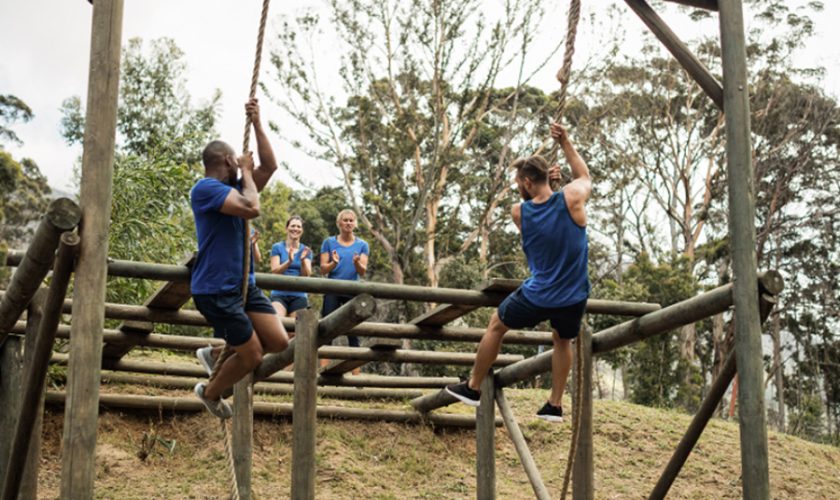
Many organisations incorporate company team-building activities into their development programmes because they encourage practical teamwork. Among the available options, obstacle courses for adults provide a unique environment where communication, cooperation, and adaptability become essential for success. Every obstacle presents an opportunity to observe how teams interact and grow.

Communication Becomes Essential for Success

Effective communication is often the difference between success and failure when navigating physical challenges. Team members must share information clearly, listen actively, and coordinate actions to overcome obstacles efficiently. Instructions, encouragement, and strategic discussions become valuable tools throughout the experience.

When designing strategic corporate events that break down communication barriers and foster better workplace interactions, company team-building packages provide highly visible collaborative environments. Obstacle-based activities place participants in situations where immediate team communication directly influences outcomes. Participants must exchange ideas continuously to progress.

Furthermore, outdoor obstacle courses for adults create natural opportunities for direct conversation. Participants quickly realise that individual effort alone is rarely enough. Success depends on the ability to support one another and maintain complete clarity while facing unfamiliar physical challenges.

Trust Develops Through Shared Challenges

Not every leader holds a management title. Challenging environments often reveal individuals who can motivate others, remain calm under pressure, and guide teams towards effective solutions. Obstacle-based activities provide an ideal setting for such positive qualities to emerge.

When looking to build resilience and introduce adults to highly engaging fitness environments, physical obstacle courses for adults deliver unique leadership scenarios. Participants must assess demanding situations, identify viable solutions, and adapt when initial movement strategies fail completely.

When groups gather outside traditional office spaces to tackle complex physical tasks together, strategic company team-building events frequently highlight these natural communication skills. Observing these diverse interactions helps teams recognise valuable individual strengths that benefit future workplace projects.

Leadership and Problem-Solving Naturally Emerge

Not every leader holds a management title. Challenging environments often reveal individuals who can motivate others, remain calm under pressure, and guide teams towards effective solutions. Obstacle-based activities provide an ideal setting for such positive qualities to emerge.

When groups gather outside the traditional office layout to tackle complex physical tasks together, company team-building events frequently introduce scenarios requiring strategic thinking. Participants must assess situations, identify solutions, and adapt when initial plans fail. Such moments encourage creative problem-solving and decision-making.

Similarly, diverse obstacle courses for adults showcase completely different leadership styles. Some individuals lead through clear direction, while others contribute by offering encouragement. Observing these natural interactions helps teams recognise valuable strengths that benefit future workplace projects.

Shared Achievements Strengthen Team Connections

Completing a difficult challenge together often creates lasting memories. Shared experiences encourage positive interactions and help colleagues develop stronger personal connections outside their usual work environment. Employees who rarely collaborate may discover common interests during these adventures.

When looking for interactive outdoor methods to enhance employee morale and boost engagement levels, company team-building sessions provide excellent neutral territory. Established teams can strengthen existing bonds through collective physical achievement. Every completed challenge becomes a shared success that improves the office atmosphere.

Moreover, modern obstacle courses for adults provide numerous opportunities for mutual celebration. Participants often return to the workplace with stronger connections, improved understanding of one another, and a much greater appreciation for the ultimate value of teamwork.

Conclusion

Teamwork becomes easier when individuals understand how to communicate, trust, and support one another. Obstacle-based challenges provide practical opportunities to develop these skills while creating memorable shared experiences. Through company team-building activities, teams can strengthen relationships, discover hidden strengths, and develop the collaborative mindset needed to succeed both during challenges and in the workplace.

Contact Forest Adventure to transform routine corporate outings into unforgettable adventures that naturally break down workplace barriers.

read more
Education

4 Warning Signs Of Childcare Centres Parents Should Avoid

Are you planning to take your child to a childcare centre in Singapore? Many parents today have the opportunity to opt for local childcare centres while they are away at home working. When you don’t have time to look after and supervise your child, you need someone who you can trust your child with during the daytime. Childcare centres should provide safe, fun and exciting play to learn and make friends with fellow kids.

While several childcare centres aim to provide quality service, there are still a few issues concerning poor services—even abuse cases. You may want to look for childcare or infant care in Singapore—which you can trust your child with. Here are four red flags of a bad childcare centre:

Sign 1 – Kids always come home with injuries

Children are always at risk of getting a few scrapes and bruises while playing with other kids. However, if a child frequently goes home with injuries, it’s likely a warning sign about the childcare centre. Parents should need to look closely into the situation. It could be that the place may have poor safety rules or a lack of proper supervision.

Sign 2 – Poor communication

It’s never easy to leave children without the parent’s watchful eye. It’s common to feel worried about them every now and then. Hence, ideal childcare in Singapore should be easy to contact. Also, they should have transparent communication.

Sign 3 – Neglected and filthy environment

Childcare centres with neglected and dirty environments pose a health risk for children. Hence, you should see to it that their surroundings are clean with proper maintenance as it is an essential requirement for childcare centres to operate.

Sign 4 – A high turnover rate of teachers

A childcare centre that always experiences changes in the roster of teachers may mean that they have poor employee treatment. Hence, it’s something that parents should settle with and expect proper treatment from their child.

If you are looking for childcare in Woodlands, visit Little Skool House for more info on childcare services.

read more