

close

child development

Education

What Makes a Reggio Emilia Preschool Different from Traditional Early Learning

What Makes a Reggio Emilia Preschool Different from Traditional Early Learning

Key Takeaways

  • Reggio Emilia preschools focus on child-led exploration rather than fixed lesson plans.
  • Learning environments are treated as an active part of education, not just a backdrop.
  • Teachers act as guides, observing and extending children’s interests.
  • Compared with a traditional kindergarten in Singapore, the approach values process over worksheets and outcomes.

Introduction

Early childhood education in Singapore is often associated with structure, routines, and clear academic milestones. Many parents expect timetables, phonics workbooks, and neat progress reports. That expectation makes sense. A typical kindergarten in Singapore has long been shaped by school readiness and future academic demands.

Then there is the Reggio Emilia approach. It feels different almost immediately. Classrooms look less like rows of tables and more like creative studios. Conversations sound less scripted. Children appear busy, but not rushed. A Reggio Emilia preschool in Singapore often surprises parents who are used to conventional early learning models, sometimes in good ways, sometimes with questions.

So what really sets it apart?

Learning Starts With Curiosity, Not a Schedule

Traditional early learning usually begins with a plan. Teachers decide what children should learn that week, then build activities around those goals. The Reggio Emilia philosophy turns that sequence around.

Here, learning begins with children’s curiosity. A question about shadows, water, or insects can grow into a week-long exploration. The topic is not chosen because it fits a syllabus, but because it matters to the children in that moment. This can feel slightly chaotic at first. Yet over time, patterns emerge. Skills develop naturally through discussion, drawing, measuring, and storytelling.

In contrast, a conventional kindergarten in Singapore often moves briskly from one topic to the next. Coverage matters. In Reggio-inspired settings, depth matters more.

The Classroom Is Not Just a Room

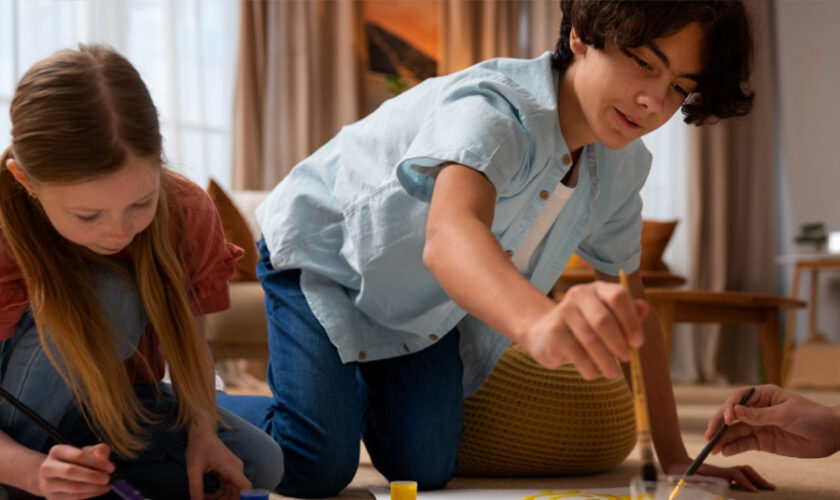
Walk into a Reggio Emilia preschool in Singapore, and the space itself feels intentional. Materials are open-ended. Natural textures appear everywhere. Displays show children’s thinking, not just finished artwork.

This idea of the environment as a “third teacher” is central. The space invites questions and collaboration. A mirror changes how a child sees a structure they built. Loose parts encourage experimentation. Even lighting and layout influence how children interact.

Traditional classrooms, by comparison, are usually designed for efficiency. Tables face the same direction. Materials are stored away until needed. There is nothing wrong with that, but it sends a quieter message about who controls learning.

Teachers Observe More Than They Instruct

In Reggio settings, teachers talk less than expected. They listen closely. They document conversations. They step in with questions rather than answers.

This does not mean children are left alone. Guidance is constant, just subtle. Teachers help children connect ideas, revisit earlier thoughts, and explain their reasoning. It is a professional role that requires patience and strong observational skills.

In many forms of kindergarten in Singapore, teachers are more visibly directive. Instructions are clear and frequent. Both styles aim to support learning, but they feel very different day to day.

Assessment Looks Different Too

Parents often ask how progress is measured. The answer can feel unfamiliar. Instead of worksheets or tests, Reggio Emilia preschools rely on documentation. Photos, transcripts of conversations, and project summaries show how thinking evolves.

This approach sometimes raises concern. Without grades, how can readiness be judged? The mild contradiction is that while formal assessment is lighter, the understanding of each child is often deeper. Teachers know not just what a child can do, but how they think and collaborate.

Over time, many families find this narrative-based insight more meaningful than scores alone.

Preparing Children for Singapore’s Reality

A common worry is whether a Reggio Emilia preschool in Singapore prepares children for primary school. The system later becomes structured, after all.

The approach does not ignore this reality. Instead, it builds foundations differently. Communication skills, confidence, adaptability, and problem-solving are practised daily. These qualities help children settle into more formal settings later, even if the transition requires adjustment.

Interestingly, some parents notice that children who once struggled with rigid tasks become more engaged learners once they understand why learning matters.

Conclusion

What makes the Reggio Emilia approach stand apart is not a rejection of structure, but a rethinking of it. Learning is organised around relationships, curiosity, and reflection rather than checklists. Compared with a traditional kindergarten in Singapore, the difference lies less in outcomes and more in the journey children take to reach them.

For families exploring a Reggio Emilia preschool in Singapore, the key question is comfort. Comfort with flexibility. Comfort with exploration. And comfort with trusting children to show who they are becoming.

To learn how this approach could support a child’s early years, get in touch with Apple Tree Playhouse to explore programmes, visits, or enrolment options.

read more
Education

Comparing Curriculum Styles in Private Preschools

Comparing Curriculum Styles in Private Preschools

Key Takeaways

  • Curriculum style shapes how children think, interact, and build daily learning habits.
  • Structured models offer clear academic progression and measurable milestones.
  • Inquiry-led approaches encourage exploration, discussion, and project-based learning.
  • Aligning school philosophy with family goals supports a smoother preschool journey.

Introduction

Exploring early education options requires close attention to how a curriculum shapes daily routines and thinking habits, particularly when considering a private preschool in Singapore for your child. Classrooms may share bright colours and welcoming spaces, yet teaching methods influence how children approach problem-solving, communication, and independent thought. Understanding those differences helps families choose with clarity.

Learning in a setting such as a Reggio Emilia preschool in Singapore develops from children’s questions and interests, with projects expanding through discussion and careful observation. Teachers record conversations and plan follow-up experiences that deepen understanding, ensuring lessons remain connected to what children genuinely notice and explore during the day.

Structured Academic Models vs Inquiry-Led Learning

Teacher-Guided Curriculum Frameworks

Families who value structure may look towards a model offered by a private preschool in Singapore where literacy and numeracy are introduced through carefully sequenced lessons. Activities follow a clear progression, and learning goals are defined so that development can be observed across the term. Routine and clarity provide reassurance for parents who appreciate visible academic direction.

An alternative path appears in a Reggio Emilia preschool in Singapore, where the timetable evolves around investigations that grow from classroom dialogue. Teachers listen attentively to children’s ideas, document emerging themes, and adjust plans to extend discussion. Projects may continue over several days, giving children time to revisit concepts, refine their thinking, and articulate reasoning with peers.

Balance Between Guidance and Independence

Structured environments maintain adult guidance as a central feature, and time spent in a private preschool in Singapore may combine directed instruction with purposeful play. Educators introduce materials linked to specific objectives while ensuring core concepts remain consistently addressed. A predictable weekly rhythm supports focus and steady participation.

Classrooms operating as a Reggio Emilia preschool in Singapore place greater weight on child-led exploration, with teachers facilitating discussion through open-ended questions and thoughtful resource selection. Learning spaces encourage movement, collaboration, and return visits to ongoing projects, promoting decision-making and shared responsibility.

Learning Environment and Classroom Culture

Physical Space and Materials

Design choices within a classroom mirror the underlying educational philosophy. Certain programmes organise defined areas for reading, construction, and art, supported by labelled storage and scheduled transitions that shape the pace of the day. Clear organisation helps children understand expectations and manage their time effectively.

Other learning spaces emphasise open-ended materials, natural textures, and visible documentation of children’s work. Photographs, sketches, and written reflections trace how ideas develop, encouraging further analysis and conversation.

Communication and Assessment

Approaches to communication also reflect curriculum priorities. Some programmes provide structured reports, scheduled conferences, and developmental summaries that map progress against planned objectives. Parents receive straightforward updates regarding academic skills and classroom engagement.

Assessment practices in inquiry-led settings highlight documentation that captures thought processes through images, recorded dialogue, and project displays. Educators share how ideas evolved during collaboration, offering insight into reasoning, creativity, and interaction patterns.

Parent Expectations and Long-Term Goals

Beyond daily lessons and classroom design, families also consider long-term outcomes when selecting a preschool. Academic readiness, social confidence, language development, and adaptability all play a role in shaping expectations. Some parents prioritise structured preparation for primary school assessments, while others value sustained curiosity and discussion skills that carry into later years.

Clarity about family goals makes curriculum comparison more practical. A structured programme may align well with households seeking defined benchmarks and measurable academic progress. An inquiry-focused model may suit families who prefer extended projects, collaborative learning, and reflective thinking. Matching philosophy with expectation creates a smoother partnership between school and home.

Conclusion

Comparing curriculum styles involves examining how teaching approaches influence everyday classroom experience. Structured frameworks emphasise progression and measurable goals, while inquiry-led environments focus on exploration and extended dialogue. Practical strengths exist in each model, and suitability depends on your child’s disposition and your family’s priorities.

Check out Odyssey – The Global Preschool today to learn how its curriculum philosophy aligns with your child’s learning style and to determine which educational direction best supports your family’s goals.

read more