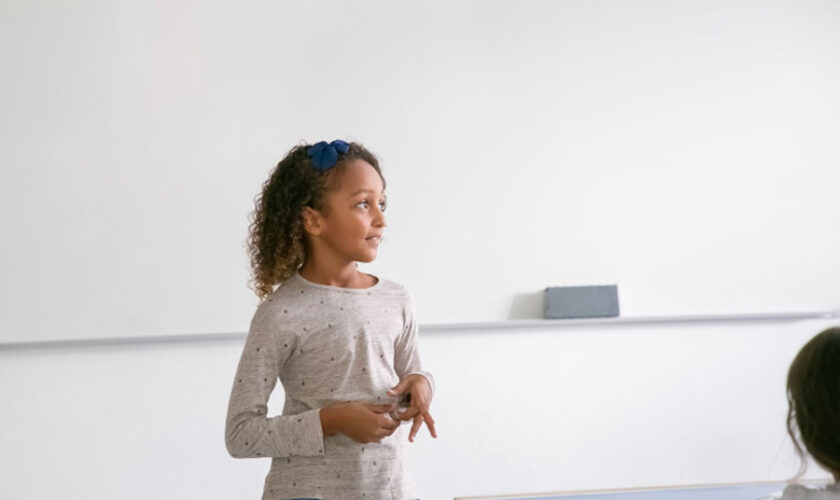

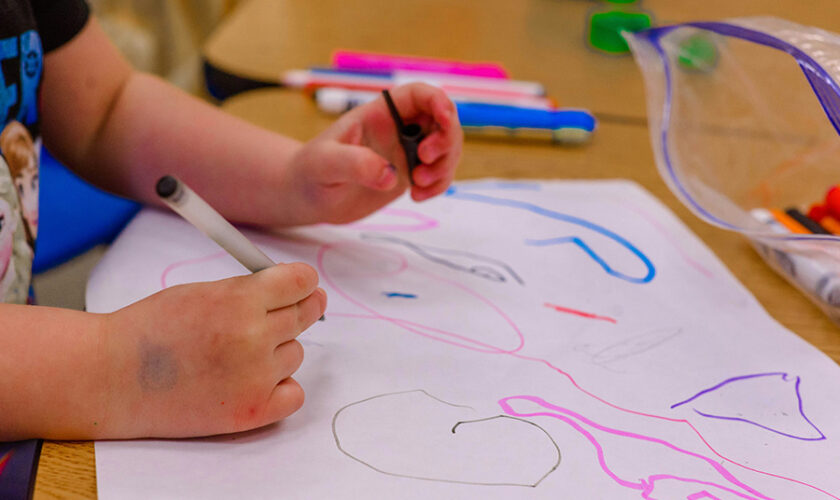
Every parent wants their child to grow up confident. Not arrogant or brash, but genuinely secure in themselves — able to try new things without being paralysed by fear of failure, able to make friends without constant reassurance, able to navigate the inevitable bumps and setbacks of life with resilience and optimism.
But confidence is not something children either have or do not have. It is something that is built, gradually and carefully, through thousands of small experiences across the early years. And the environments in which children spend those years — the people around them, the expectations placed on them, the opportunities they are given — play a far bigger role than most parents realise.
So what actually builds confidence in young children? And how can the right early years setting give your child’s self-belief the very best start?
Confidence Is Built Through Experience, Not Praise
One of the most counterintuitive things about building confidence in young children is that it is not primarily about telling them they are wonderful. Research in child psychology has consistently found that children who receive indiscriminate praise — “you’re so clever!”, “you’re amazing!” — can actually become less confident over time, not more.
Why? Because when children are praised for being clever rather than for the effort they put in, they become afraid of tasks that might reveal they are not as clever as they have been told. They start to avoid challenges. They give up more quickly when things are hard. They become more concerned with how they look than with what they are learning.
What actually builds confidence is something different: the experience of trying something difficult, working at it, and succeeding. Or trying something, not quite getting there, and trying again. It is the development of what psychologists call a growth mindset — the understanding that ability is not fixed, that effort and persistence lead to improvement, and that struggling is not a sign of failure but a normal and necessary part of learning.
Good early years settings understand this instinctively. They give children challenges that are pitched just right — demanding enough to require real effort, but achievable enough not to overwhelm. They celebrate persistence as much as achievement. They create a culture where having a go is valued above getting it right.
The Power of Secure Relationships
Before a child can be confident in the wider world, they need to feel safe. And feeling safe, for a young child, means having secure, consistent relationships with trusted adults.
Attachment theory — one of the most well-evidenced ideas in all of developmental psychology — tells us that children who have secure attachments to their caregivers are more likely to explore confidently, take appropriate risks, recover from setbacks, and form positive relationships with others. Children who feel securely held, emotionally speaking, have a safe base from which to venture out into the world.
In an early years setting, this is one of the most important things to look for. Does your child have a key worker who knows them well, who they can turn to when they are unsettled, who communicates warmly with you as a family? Are relationships in the setting consistent and stable? Do the staff have genuine warmth for the children in their care — not just professionalism, but real human connection?
These relationships are not a nice extra. They are the foundation on which everything else is built.
Independence: Letting Children Do Things for Themselves
Another cornerstone of confidence is independence — and it is one that can be surprisingly difficult for loving parents to give. It is so much quicker, so much easier, to just do things for our children. To put their shoes on for them. To tidy up the mess before they have had a chance to try. To step in the moment something becomes a little bit hard.
But every time we do this, we inadvertently send a message: you cannot manage this yourself. And children, who are watching us so carefully and taking their cues from us in everything, absorb that message.
High-quality early years settings are brilliant at fostering independence — largely because practitioners have slightly more emotional distance than parents do, and therefore find it easier to hold back and let children work things out. A good setting will encourage children to pour their own drinks, put on their own coats, tidy up their own resources, and choose their own activities. These things take longer and are sometimes messier. They are also enormously valuable.
When a child puts on their own shoes for the first time — even if they go on the wrong feet — the look on their face is something to behold. That is confidence being built, one small moment at a time.
Learning to Navigate Friendships
Social confidence is its own skill set, and the early years are the time when children first start to develop it. Learning how to approach another child and start playing together. Learning how to deal with it when someone does not want to play with you. Learning how to share, how to negotiate, how to stand up for yourself, and how to resolve a disagreement without everything dissolving into tears.
None of this comes naturally or automatically. It requires experience, guidance, and a safe environment in which to practise. Good early years practitioners support children’s social development actively — noticing when a child is struggling to connect with peers and gently facilitating friendships, helping children find the words for emotions they do not yet have language for, modelling calm and constructive ways of handling conflict.
Children who have had plenty of opportunity to develop these skills in a supported environment tend to arrive at primary school with a significant advantage — not just socially, but academically too.
What to Look for in a Setting
If you are searching for an early years setting that will actively nurture your child’s confidence and sense of self, here are the things to keep an eye out for. Look for practitioners who are warm but also allow children to struggle productively. Look for an environment that offers genuine challenge — physical, creative, social, and intellectual. Look for a culture that celebrates effort and persistence above perfection.
Knightsbridge Kindergarten is exactly this kind of setting — a place where children are genuinely supported to develop confidence, independence, and a love of learning from the very earliest age.
The Long Game
Confidence built in the early years does not disappear when children move into primary school. It compounds. A child who arrives at school with a secure sense of who they are, a belief in their own ability to tackle challenges, and the social skills to navigate a busy classroom — that child is set up not just for a good first year, but for a good school career.
The early years are short. They are also extraordinary. The investment you make in finding the right environment for your child during this time is one of the most valuable things you will ever do for them. Make it count.