


close

February 2026

Music

4 Skills Actually Taught in Structured Electric Guitar Lessons

4 Skills Actually Taught in Structured Electric Guitar Lessons

Key Takeaways

  • Structured electric guitar lessons prioritise transferable skills, not random songs or isolated techniques.
  • Technique, rhythm, musical understanding, and disciplined practice habits form the core learning pillars.
  • Progress in formal music lessons is measured by consistency, control, and adaptability—not speed alone.
  • Well-designed electric guitar lessons in Singapore are built to prevent common self-learning plateaus.

Introduction

Many learners assume that electric guitar lessons are mainly about learning songs or copying riffs. In reality, structured programmes focus on skill acquisition that supports long-term progress, regardless of genre or playing style. This distinction matters in a market where music lessons range from casual coaching to formal, syllabus-driven instruction. Structured electric guitar lessons in Singapore are designed around skills that remain relevant as students advance, rather than short-term wins that fade once the lesson ends.

The following four skills are consistently taught across professionally structured programmes and form the backbone of effective guitar education.

1. Technical Control and Physical Efficiency

The first core skill taught in structured electric guitar lessons is technical control. This skill includes correct fretting-hand positioning, pick grip, alternate picking, string muting, and controlled articulation. These elements are not taught in isolation but reinforced through repeated application across scales, exercises, and repertoire. The emphasis is on efficiency rather than speed. Poor technique often leads to tension, inconsistent tone, and injury over time, which is why structured music lessons prioritise posture, hand alignment, and relaxed movement early in the learning process. This foundation allows students to play longer, cleaner, and with greater consistency as complexity increases.

2. Rhythm Accuracy and Timing Awareness

Rhythm is frequently underestimated by beginner guitarists, yet it is one of the most critical skills developed in formal electric guitar instruction. Structured electric guitar lessons focus heavily on timing accuracy, subdivision, and groove awareness. Students are trained to play in time with metronomes, backing tracks, and ensemble settings. This skill goes beyond keeping time; it involves understanding syncopation, rests, and rhythmic phrasing. Music lessons that follow a structured curriculum treat rhythm as a measurable skill, not a vague concept, because timing flaws are often the primary reason players struggle to perform confidently with others.

3. Musical Understanding and Fretboard Logic

Another essential skill taught in structured programmes is musical understanding. This skill includes scale construction, chord relationships, and fretboard navigation. Rather than memorising patterns without context, students learn why notes work together and how shapes connect across the neck. Electric guitar lessons often integrate theory directly into playing exercises, ensuring concepts are applied immediately rather than learned abstractly. This approach enables students to improvise, transpose, and adapt material instead of relying on fixed positions. Over time, this skill reduces dependence on tabs and accelerates learning across new material.

4. Practice Structure and Progress Tracking

Perhaps the most overlooked skill taught in structured music lessons in Singapore is how to practise effectively. Students are guided on how to break down material, prioritise weaknesses, and manage limited practice time. Structured electric guitar lessons emphasise goal-setting, weekly benchmarks, and measurable improvement rather than unfocused repetition. Learners are taught how to identify errors, correct them systematically, and track progress across months rather than sessions. This skill is critical for sustaining improvement outside the classroom and preventing stagnation, especially for adult learners balancing work and personal commitments.

Conclusion

Structured electric guitar lessons are not designed to impress quickly; they are built to develop durable, transferable skills. Technique, rhythm, musical understanding, and disciplined practice habits form the core of effective guitar education and are consistently reinforced in professional programmes. Remember, in a competitive landscape of music lessons in Singapore, structured electric guitar lessons stand out by focusing on how students learn, not just what they play. That said, these four skills create a foundation that supports confident playing, adaptability, and long-term growth across any musical direction.

Contact Sonare Music School to experience how real skill development is taught, not guessed.
read more
Education

4 Ways How a Bilingual Preschool in Singapore Uses Outdoor Play to Enhance Learning

4 Ways How a Bilingual Preschool in Singapore Uses Outdoor Play to Enhance Learning

Key Highlights

  • Outdoor play strengthens language acquisition in bilingual settings through natural, context-rich interactions.
  • Physical activities outdoors support multiple developmental domains outlined in comprehensive child development curriculum frameworks.
  • Nature-based learning environments enhance cognitive flexibility and problem-solving abilities.
  • Structured outdoor programmes align with the nursery curriculum in Singapore standards, whilst promoting cultural awareness.

Introduction

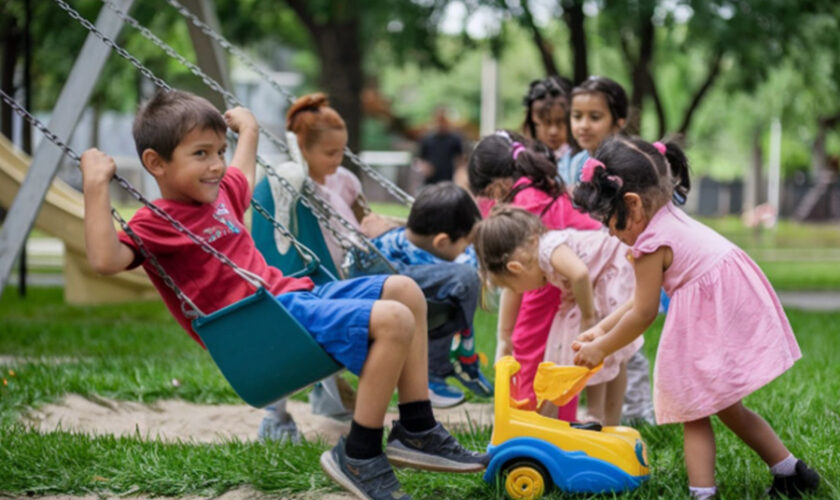
The connection between outdoor play and cognitive development has transformed how educational institutions approach early learning. Bilingual preschools across Singapore have recognised that playgrounds and garden spaces serve purposes far beyond simple recreation. These environments become dynamic classrooms where children absorb two languages simultaneously whilst developing motor skills, social awareness, and environmental consciousness.

Research consistently demonstrates that young minds thrive when learning extends beyond four walls. For families considering a Chinese preschool or any bilingual programme, understanding how outdoor activities complement structured lesson plans becomes essential in making informed decisions about early education.

1. Language Immersion Through Natural Contexts

Children learning Mandarin and English simultaneously benefit tremendously from outdoor settings that provide authentic contexts for vocabulary building. When educators guide nature walks, they create opportunities for spontaneous language switching that mirrors real-world bilingual communication. A child examining insects might hear “butterfly” and “蝴蝶” used interchangeably, cementing both terms through direct sensory experience rather than rote memorisation.

These unscripted moments prove more effective than flashcards because emotional engagement amplifies retention. A well-designed child development curriculum incorporates such experiences systematically, ensuring outdoor time serves specific linguistic goals whilst appearing entirely playful to participants. Teachers might structure scavenger hunts requiring children to identify objects using vocabulary from both languages, turning gardens into immersive learning laboratories.

The nursery curriculum in Singapore increasingly emphasises such integrated approaches, recognising that language acquisition accelerates when children associate words with actions, textures, and discoveries. Climbing frames become venues for learning directional vocabulary, whilst sandpits facilitate conversations about quantities and comparisons across two linguistic systems.

2. Physical Development Meets Cognitive Growth

Outdoor play equipment challenges children’s gross motor skills in ways that directly support brain development. Neuroscience reveals that physical movement strengthens neural pathways responsible for problem-solving and memory formation. When bilingual programmes incorporate obstacle courses, balancing activities, and coordinated group games, they’re simultaneously building physical competence and cognitive architecture.

A robust child development curriculum acknowledges these interconnections explicitly. Educators might design activities where children must follow multi-step instructions in Mandarin to complete a physical challenge, then explain their strategy in English afterwards. This layered approach exercises working memory, language switching abilities, and physical coordination within single activities.

Traditional playgrounds often separate physical education from academic learning, but contemporary nursery curriculum in Singapore frameworks reject this artificial division. Climbing challenges become mathematics lessons involving spatial reasoning. Group sports introduce conflict resolution and negotiation skills practised in both languages. Even simple activities like watering plants create opportunities to discuss life cycles, responsibility, and seasonal changes using bilingual vocabulary.

3. Cultural Learning Through Environmental Engagement

Gardens and outdoor spaces offer unique platforms for transmitting cultural knowledge that purely classroom-based instruction cannot replicate. Chinese nursery preschool programmes frequently incorporate traditional activities like growing vegetables used in local cuisine or celebrating seasonal festivals outdoors. These experiences ground abstract cultural concepts in tangible, memorable experiences.

Children might participate in planting exercises timed with traditional agricultural calendars, learning both the scientific processes and cultural significance simultaneously. Such activities fulfil multiple objectives within a comprehensive child development curriculum, addressing cognitive, social, cultural, and physical developmental domains concurrently.

The nursery preschool curriculum in Singapore benefits from the nation’s multicultural context, and outdoor spaces become neutral zones where various traditions can coexist and intermingle. A well-designed programme might rotate through different cultural perspectives on nature, seasonal celebrations, and environmental stewardship, with each explored through both English and Mandarin frameworks.

4. Social-Emotional Development in Unstructured Settings

Perhaps outdoor play’s most valuable contribution comes through unstructured social interaction. When children negotiate playground rules, resolve disputes over equipment, or collaborate on imaginative projects, they develop emotional intelligence that formal lessons struggle to teach. Bilingual settings amplify these benefits because children must navigate social dynamics whilst managing two language systems.

Educators observe these interactions carefully, intervening strategically to extend learning moments. A child development curriculum that prioritises social-emotional growth recognises outdoor free play as essential rather than supplementary. Teachers might notice children defaulting to one language during conflicts and gently encourage them to express feelings in both languages, building emotional vocabulary across linguistic systems.

The current nursery curriculum in Singapore emphasises holistic development, and outdoor environments naturally support this goal. Children learn risk assessment whilst climbing, persistence when mastering new physical skills, and empathy when comforting peers who’ve experienced minor setbacks. These lessons occur organically within contexts that feel like pure play, making them deeply internalised rather than superficially memorised.

Conclusion

Outdoor play represents far more than a break from academic instruction within quality bilingual early childhood programmes. These experiences form the foundation upon which language skills, physical capabilities, cultural awareness, and social competencies develop simultaneously. Educational approaches that integrate outdoor learning with structured curricula prepare children for both academic success and life beyond classroom walls.

Ready to see how outdoor learning transforms early education? Visit Orange Tree Preschool and experience firsthand how our bilingual programme uses nature as a classroom.

read more
Tutoring

How Science Tuition Supports Students Struggling with Complex Concepts

How Science Tuition Supports Students Struggling with Complex Concepts

Key Takeaways

  • Complex science topics often feel difficult because they are abstract and fast-paced in school settings
  • Science tuition in Singapore helps by breaking ideas into simpler, relatable explanations
  • Personalised pacing allows students to revisit weak areas without pressure
  • Regular practice in a supportive setting improves both confidence and exam readiness
  • Choosing the best tuition centre in Singapore means finding one that adapts to the student’s learning style

Introduction

Science can feel exciting one moment and completely baffling the next. One chapter makes sense, the next feels like a different language altogether. This is a common experience for many students in Singapore, especially when lessons move quickly and classrooms are packed. When complex ideas start piling up, confidence often drops before grades do. That is where targeted science tuition in Singapore can make a meaningful difference, not by rushing ahead, but by slowing things down at the right moments.

Why Some Science Topics Feel Harder Than Others

Certain science topics ask students to visualise things they cannot see. Think of chemical bonding, forces acting on objects, or how cells communicate. These ideas are abstract, layered, and often taught under tight timelines. In school, teachers do their best, but they have to keep pace with the syllabus.

Outside the classroom, distractions creep in, too. Mobile phones, CCAs, and exam pressure all compete for attention. Over time, small gaps in understanding turn into larger problems. A student may memorise formulas without truly grasping the logic behind them. That is usually when parents start considering science tuition in Singapore as additional support rather than a last resort.

Breaking Big Ideas Into Manageable Pieces

A good tutor knows that complex concepts rarely need more content. They need clearer explanations. Instead of repeating the same textbook phrases, tutors often reframe ideas using everyday examples. A physics concept might be explained using MRT rides. Chemical reactions might be compared to cooking steps at home.

This kind of reframing matters. It gives students something familiar to hold onto. Once the foundation feels steady, confidence starts to build again. Over time, students are more willing to ask questions, even the ones they think sound silly. That shift in mindset is often more valuable than any worksheet.

Learning At A Pace That Feels Human

School lessons tend to move fast. Tuition sessions do not have to. One of the biggest advantages of enrolling in the best tuition centre in Singapore is the flexibility to pause, revisit, and reinforce topics as needed. If a student struggles with one idea, the tutor can adjust immediately.

There is also room for small digressions. A tutor might briefly connect a lesson to current events, exam trends, or even how science shows up in daily life. These side conversations help learning feel less rigid and more real. They also make lessons feel less like drills and more like guided conversations.

Practice Without The Pressure

Many students understand concepts during lessons but freeze during tests. Tuition provides a safer space to practise without the fear of judgement. Mistakes are treated as part of the process, not something to hide.

Regular exposure to exam-style questions helps students spot patterns and common traps. Over time, they learn how to approach questions calmly, even when they look unfamiliar. This steady practice is one reason science tuition in Singapore is often linked to improved exam performance, especially for students who struggle with confidence.

Emotional Support Matters More Than It Sounds

Academic struggles often come with emotional weight. Students may feel frustrated, embarrassed, or simply tired of trying. A patient tutor can make a difference here, too. Encouragement, honest feedback, and small wins help rebuild trust in one’s own ability.

Interestingly, some students are resistant to tuition, only to later look forward to sessions. Once learning feels manageable again, motivation tends to follow. Parents often notice this shift at home, through better study habits or fewer last-minute panics before tests.

Choosing Support That Fits The Student

Not every tuition setup works for every child. Some thrive in small groups, others prefer one-to-one guidance. What matters is finding an environment where questions are welcomed, and explanations make sense. The best tuition centre in Singapore is often the one that adapts to the student, not the other way around.

When chosen thoughtfully, science tuition in Singapore becomes less about chasing grades and more about restoring clarity. Concepts stop feeling overwhelming. Lessons start to connect. And science, slowly, feels interesting again.

Conclusion

Struggling with complex science topics does not mean a student lacks ability. Often, it simply means they need explanations that match how they think and learn. With the right guidance, science tuition in Singapore can help students rebuild understanding, confidence, and curiosity at a steady pace. Contact Eton Academy and take the first step towards clearer learning and calmer exam seasons for your child.

read more